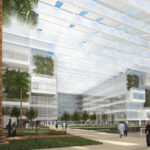
Abu Dhabi Medical Rehabilitation Centre – A New Paradigm for Healing
The Abu Dhabi Medical Rehabilitation Centre embodies a distinct design philosophy, aiming to seamlessly integrate the welcoming ambiance of a recreational resort with cutting-edge medical services. A core objective of this Rehabilitation Centre is to foster strong ties with the surrounding community. Through its sophisticated architecture and specialized medical service portfolio, the Centre seeks to become a vital community asset, offering continuous and trusted care throughout a patient’s lifetime.
The Centre’s comprehensive range of services will cater to all rehabilitation needs, providing a full spectrum of rehabilitation programs. Innovative, integrated examination, treatment, and therapy concepts are designed to ensure a rapid and sustainable return to health, well-being, and community integration. In this capacity, the Rehabilitation Centre will serve as a centre of excellence for rehabilitative and physical medicine, particularly for post-acute accident victims.
Design Principles for Well-being:
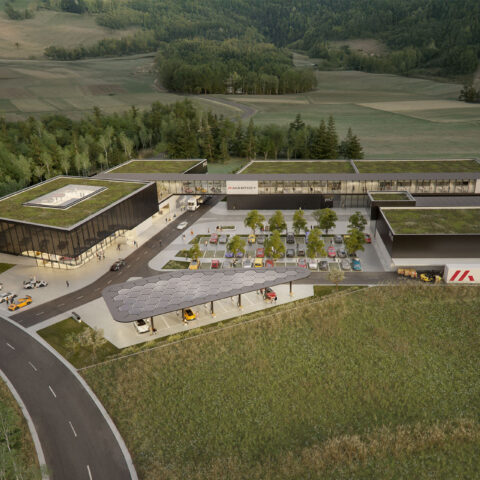
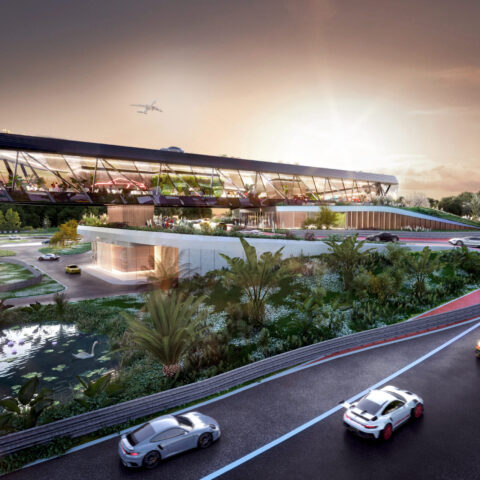
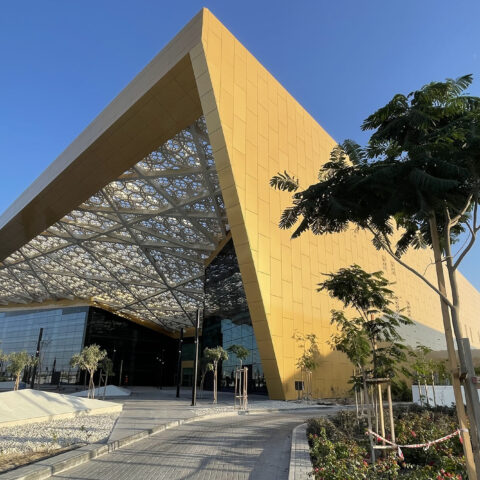
The architectural design emphasizes openness and transparenc*, blending the facility with its recreational environment. While efficient building layouts will support optimal medical and care workflows, the underlying concept extends beyond mere medical infrastructure. The aim is to create a true healing environment that harnesses the benefits of daylight and a natural, friendly patient environment. The building’s height, size, and proportions are carefully considered to reflect the human factor, benefiting not only inpatients and outpatients but also medical and non-medical staff and visitors.
Sustainable and environmentally friendly building concepts are integral to the design, incorporating unique engineering solutions such as energy-efficient solar panels and a sophisticated desiccant-evaporating-cooling system. The integration of lush rolling greenery, fluent transitions from garden areas into the building, specialized therapy gardens, and inner courtyards with theme gardens will provide diverse spaces for tranquillity and recreation.
Community Integration and Internal Structure:
A key tenet of the design is the seamless integration of the building into the urban neighbourhood, both existing and future. This objective not only meets urban planning demands but also offers significant psychological benefits for patients and their families, fostering a sense of belonging to the Khalifa City community during their stay. The architectural approach prioritizes integration over exhibition, linking local urban elements such as green areas, squares, walkways and cycle tracks with the rehabilitation centre’s landscaping.
This integration extends to the buildings’ inside appearance, structured by a series of courtyards. These courtyards serve crucial functions, providing patients with daylight, fresh air, and serene garden “oases” for relaxation and well-being. Furthermore, these regularly distributed courtyards create an internal environment akin to a small urban setting, aiding in the building’s organization and wayfinding system.
Functional Layout and Architectural Detail:
The architectural approach is evident in the façade, which reflects the interior functions of the different levels. The building spans 135 m in length and 80 m in width, providing approximately*150 beds.
The access to the main entrance of the Rehabilitation Centre is located on the north side of the building, including access to the basement parking area.
The ground floor, housing the heart of the building with its therapy areas for inpatients and outpatients, forms the central hub. It is primarily dedicated to medical examination, treatment, and diagnostics, complemented by the entrance hall, information desk, medical admissions, shops, and a cafeteria for patients and visitors.
The *first floor features wards with single compartments for 6 VIPs and separate wards for children and adolescents.
The second and third-floor areas are reserved for standard wards.
Finally, a basement is designated for car parking (330 lots), technical areas, storage, kitchen facilities, and staff changing rooms.